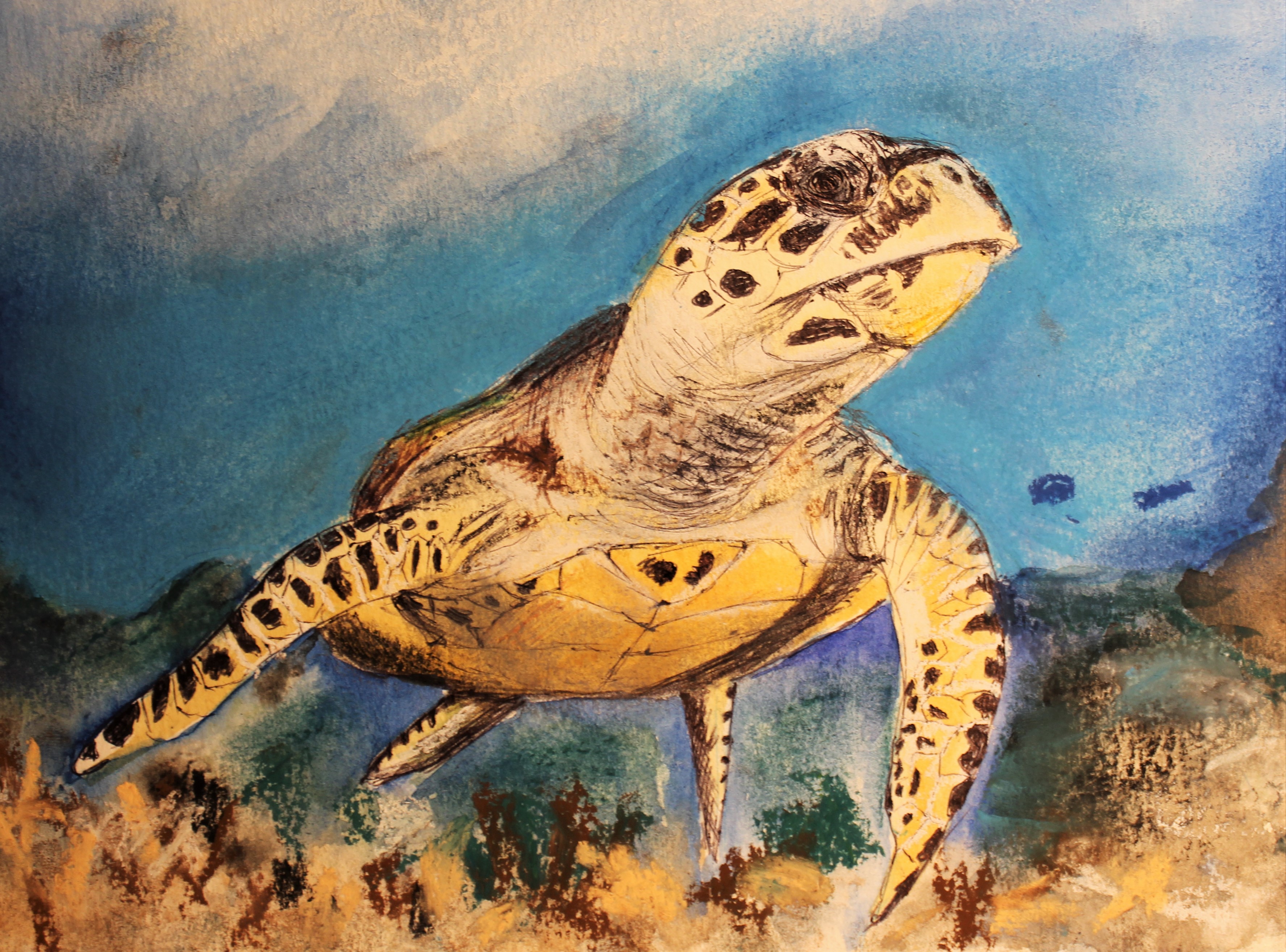
It was about time to draw a marine animal. Very mixed technique of watercolour, pen and soft pastel on paper.
Animal: Hawksbill turtle (Eretmochelys imbricata)
Hawksbills are considered Critically Endangered around the world by the IUCN Red List.
- Considered by many to be the most beautiful of sea turtles for their colourful shells, the hawksbill is found in tropical waters around the world. They spend their time in coral reefs, rocky areas, lagoons, mangroves, oceanic islands, and shallow coastal areas.
- Hawksbill turtles are omnivorous, but their preferred food in many areas is sea sponges. They will also eat marine algae, corals, mollusks, tunicates, crustaceans, sea urchins, small fish, and jellyfish.
- There are difficulties in accurately assessing population size, but a recent estimate of adult nesting females of 8,000+ has been made.
- Females will return to the very beach that they were born on, to lay their own eggs! It is believed that this occurs by use of magnetic sensing. Females will lay on average 80 eggs per nest, and all the hatchlings will emerge from the nest together.
2. Why they are endangered?
In many parts of the world, hawksbills face the unique threat of being hunted for their beautiful shell, also known as “tortoise shell”, which is used by craftspeople to create many types of jewelry and trinkets. The historical hunting and killing of hawksbills for their shell nearly drove the species to extinction.
Other threats include destruction of nesting and feeding habitat, pollution, boat strikes, coastal development, entanglement in fishing gear, consumption of their meat and eggs, and destructive fishing practices like dynamite fishing.