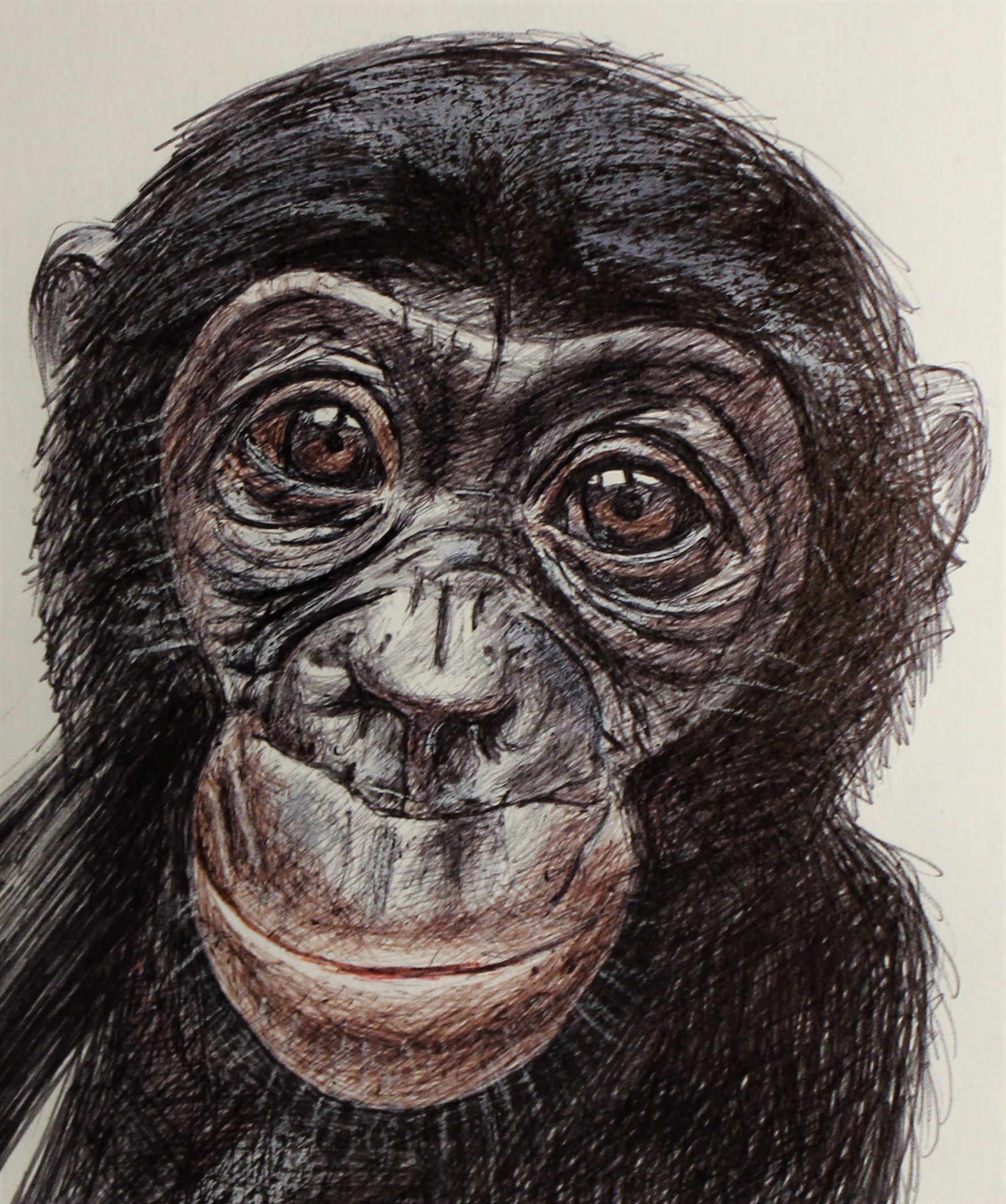
Say hello to our hairy little cousin bonobo – just like chimpanzees, they share 98% of their DNA with humans. Drawing made with ballpoint pen on paper.
1. Animal: Bonobo (Pan paniscus):
- Wild bonobos can only be found in forests south of the Congo River in the Democratic Republic of Congo. The last great #ape species discovered, bonobos could be the first to become extinct unless concerted action is taken now to protect them and their rainforest home.
- For several reasons, it has been difficult to collect reliable population estimates of bonobos. They inhabit a remote, densely forested area, most of which is accessible only by boat or bush plane. Current estimates range from 10,000 to 20,000 bonobos left in the wild—but what is clear is that the population, small to begin with, is fragmented and decreasing.
- Bonobos are the most vocal of the great apes, using their voices extensively to express themselves and to communicate with others.
- They have the only great ape society led by females, with a sophisticated social structure that encourages cooperation and peace.
- While fruit is their favourite food, they also eat leaves, flowers, seeds, bark, fungus, and honey. More than 113 types of plants make up their diet. They play an important role as seed dispersers, which is critical for forest regeneration.
2. Why they are endangered?
The collective threats impacting wild bonobos include: poaching, civil unrest, habitat degradation, and a lack of information about the species. Disease transmission also poses a greater threat as human contact increases.